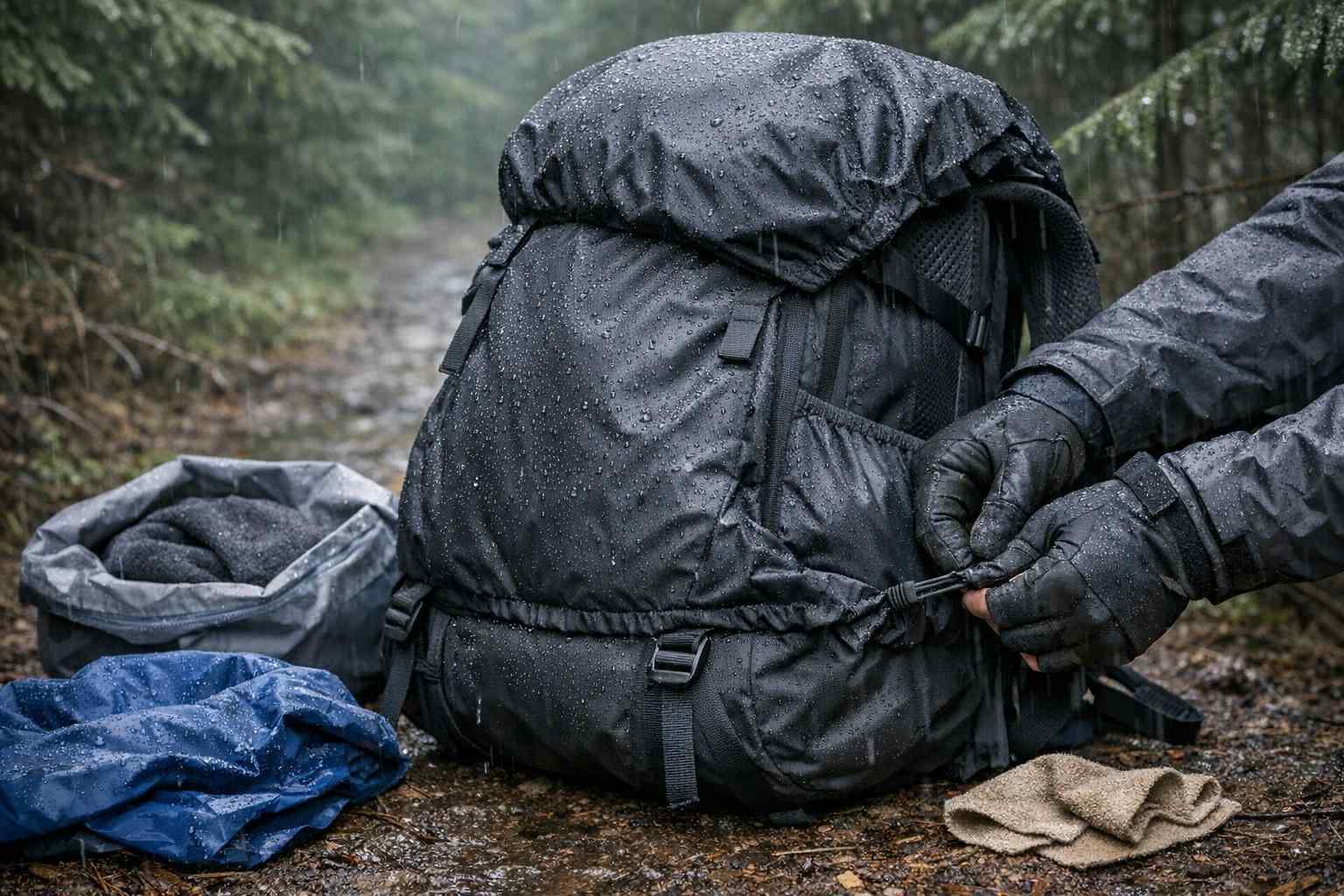
Protection of your gear on a short hike requires the same care as on longer treks. Although you may have spare clothing in your daypack or with you, you will also have sensitive items such as your electronics. These need to be kept as dry as possible and using a good quality rain cover for your daypack is one of the simplest methods to keep items dry. There are many different types of rain covers available and their effectiveness can vary greatly. While some are designed to be waterproof, others are also breathable to stop moisture forming inside your pack. Choosing the right rain cover will depend on your hiking environment, your daypack, and how you intend to use the cover in different weather conditions.
Understanding Your Environment
Weather can change during a short day hike, and rain can develop quickly in mountainous and woodland areas. For longer treks, be it day or multi-day, the best gear to protect your pack from rain is a high quality rain cover that will stop rain getting in through the outer fabric of your pack and entering the pockets. Check the cover against the dimensions of your loaded pack rather than choosing by capacity alone.
The Impact of Wind and Terrain
Wind can easily get under poorly fitting covers. Branches can also get caught in loose material, potentially ripping or damaging the cover, and even causing you to lose items from your pack. The cover must be of a snug fit, especially in the woods where there are many scraggly branches. On exposed ridges, the secure attachment and coverage are of utmost importance. A larger cover is not necessarily better than a smaller one, for the extra material could catch in the wind and expose parts of your pack to the elements.
Always Be Prepared
Even on the clearest of days, it's always worth remembering that it can start to rain at any time. Waterproof bags will provide adequate protection for clothing, such as spare socks and base layers, plus for other items like your electronics and first aid kit. Damp items should be stored separately from dry ones and the pack, plus the rain cover left open where possible, to allow them to dry out as soon as possible. Look for a rain cover that includes reflective elements or bright colors to increase visibility in poor light. This can help other people notice you in poor visibility.
Ensuring a Good Fit
Don't make the mistake of thinking that two products that look roughly the same are always going to fit packs of the same size. Just as important as the overall dimensions is how well the cover will fit the underside of a pack and how it will interact with the individual's side compression straps, hip belts, and zipped side pockets and other fittings. In particular it's worth checking that the cover won't interfere with the lower attachment points of the pack. It's also worth checking how well individual features such as belted side compression straps are accommodated.
Real-World Testing
A test run on the hills, with the backpack loaded, is also a good idea. You should be able to check whether the raincover extends down to the underside of the backpack far enough and whether it gets in the way of the hip belt or the side pockets. A good retailer will also be able to tell you about the fitting and about returning covers that don't fit. Check the retailer's return conditions before testing the cover outdoors.
Importance of Adjustability
Elastic edges with cord locks are very handy as they can be adjusted even while wearing gloves. However, there is a limit as to how tight you can make them as the cover can stress the seams and potentially tear when you take the cover on and off. Look for sturdy seams and closures when selecting a rain cover and test them out during the fit testing.
Balancing Protection and Ventilation
A rain cover sheds water from the exposed pack fabric, but it does not seal the harness area or every opening. Water can still reach the contents. Use a suitable waterproof liner or separate dry bags for items that need reliable protection.
Moisture already inside the pack cannot be removed simply by putting a cover over it. Keep wet clothing separate from dry equipment in its own bag. Do not rely on placing wet clothes below dry ones to prevent moisture transfer.
Managing Damp Equipment
Check the manufacturer's material and care information rather than assuming that a cover is breathable. When the rain stops and conditions permit, remove the cover and air damp equipment. Dry the cover before storing it for an extended period. Keep access to essential equipment clear while rearranging wet and dry items.
Additional Features to Consider
Other important features that are worth considering when looking for the right rain cover:
1. Storage Pocket: Many rain covers have a storage pouch for them when not in use. Make sure that the packed cover will fit into your daypack's side pocket or rear compartment without blocking access to other gear.
2. Attach Points: Some raincovers have attach points or special straps that can be attached to a backpack. These are very useful in very windy conditions.
3. Color and Visibility: Bright colors and reflective strips enhance the visibility of the hiker in low-light situations, adding a safety feature to your adventure.
4. Weight and Packability: This feature considers how much a rain cover weighs, and how easy it is to stow away in a pocket, or in another part of your pack when not needed. Look for light weights, and very packable designs.
Final Thoughts
It just may be one of the most useful small pieces of gear you have on your hiking trip. Take the time to compare the various styles of rain covers. Choose one that best fits your backpack and your style of hiking. With a good rain cover you'll be protected from most of the rain, and you can manage your damp gear as you see fit. Don't underestimate the importance of a good rain cover. It is just one of the many pieces of preparation that can ensure a safe and enjoyable hiking trip.